The burning of Futh’s mother’s belongings
The Lighthouse (Alison Moore Edition)The burning of Futh’s mother’s belongings is Futh’s father’s attempt to erase the traces of a family member who has left. Carried out before Futh wakes, the destruction reaches from books, photographs, and clothes to the garden she once tended; its apparent thoroughness is unsettled by what escapes the fire and remains with Futh.
The Bonfire and Its Contents
After Futh’s mother leaves, Futh’s father builds a bonfire in the garden and lights it before Futh wakes. He throws onto it everything she has left behind. Among the objects are books; framed photographs and pictures she never hung; folders of her Open University work; and a pin board still carrying lists Futh cannot decipher. The destruction extends beyond keepsakes: Futh’s father first smashes furniture, then burns it along with clothes, kitchen-curtain material, and the walking boots belonging to Futh’s mother and Futh.
The bonfire consumes even the remnants of her activity outdoors. Futh’s father pulls up the flowers and weeds in the bed Futh’s mother had planted and later neglected, between the climbing frame and the fence. He adds something to help the fire devour the pile, and the burning leaves the air filled with searing fumes. The scene’s scale matters: this is not the disposal of a few selected reminders but a sweeping destruction of household objects, personal records, and a small part of the garden.
Erasure and Its Limits
While the fire blazes, Futh’s father cleans the house, hoovering and scrubbing until, in Futh’s recollection, nothing of Futh’s mother seems to remain inside. The final trace is a lingering smell of disinfectant in every room. The cleaning follows the burning as a second act of removal: the fire destroys the possessions, while the scrubbing makes the emptied house appear to have been cleared of their presence.
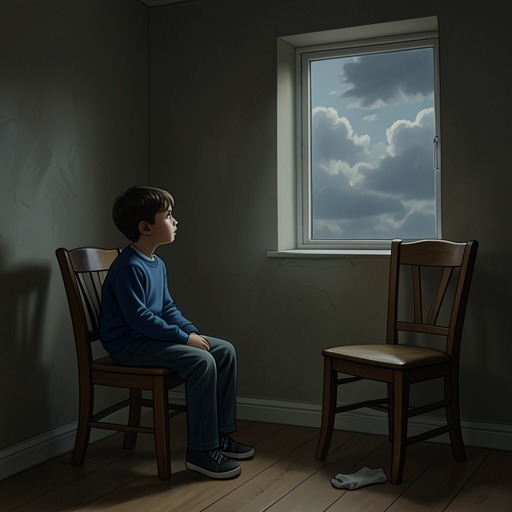
That erasure is never complete. Futh supposes that microscopic particles must have escaped his father’s cleaning, and he knows of more tangible survivals: books belonging to Futh’s mother, hidden under his mattress, and the silver lighthouse he continues to carry everywhere. The contrast between the scale of the bonfire and these concealed or portable remnants gives the episode its lasting consequence. Futh’s father can remove most of the objects from the house, but the past persists in what Futh keeps and carries.
Memory and Significance
The episode is presented through Futh’s recollection, which makes the destruction more than a report of household disposal. Its inventory records what was lost in concrete terms: photographs, unfinished or unshared work, furniture, clothing, boots, and the planted bed. The intimate range of the list shows how thoroughly Futh’s father’s action reaches into the material spaces associated with Futh’s mother.
The surviving books and lighthouse also mark different forms of attachment. The books remain concealed beneath Futh’s mattress; the lighthouse remains openly with Futh as he moves through life. Against Futh’s father’s effort to make the house bear no visible trace of Futh’s mother, these objects preserve a connection that the fire and cleaning cannot extinguish. The episode thus establishes both the violence of the attempted erasure and its failure to make the past disappear.